
“I am a Canadian, free to speak without fear, free to worship in my own way, free to stand for what I think right, free to oppose what I believe wrong, or free to choose those who shall govern my country. This heritage of freedom I pledge to uphold for myself and all mankind.” ~~ John G. Diefenbaker

ELLIS ROSS – That isn’t real experience. That’s called politics. Let me draw on my own life to tell you what I believe real experience means ...

It’s been said by some in the political establishment that I don’t have sufficient “experience” to lead our party. A few weeks back, another leadership candidate said a similar thing about my “education.”


But it got me thinking, what do they mean by “experience?” Here’s the truth…
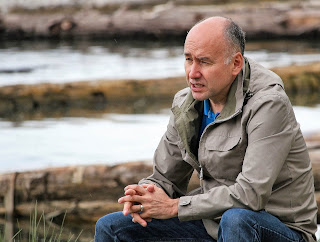

I’ll always lose a debate about which candidate has spent the most taxpayers’ money over the course of their political career.


But to me, that isn’t real experience. That’s called politics. Let me draw on my own life to tell you what I believe real experience means…


I helped bring the largest-ever private sector investment in Canadian history to our province in the form of LNG-Canada. The royalties helped lift my community out of poverty, enabling a new generation of leaders and entrepreneurs to take charge of their destiny. Plus, those royalties continue to fund our hospitals, schools, and roads today.


But that’s not all. As a First Nations leader, I’ve had to help my people overcome poverty, addictions, and violence. I’ve seen things that I will never be able to forget – no matter how long I live.


It’s time for the political establishment to acknowledge the truth, which is that First Nations leadership roles are just as important as other forms of political leadership, especially when issues around social welfare, environmental stewardship, and responsible resource development are involved.


For me, experience also means knowing how to connect with everyday people and channel their hopes, dreams, and aspirations – not just being a household name among a small circle of political elite.


I’ve been a logger, a labourer, a small businessperson, and, yes, I lived through periods of unemployment – like a lot of British Columbians. I know what it’s like to get your hands dirty, to navigate a crawl space, and to gulp down two-day-old coffee on a job site.


Those experiences are some of my most valuable – and helped shape the man I am today. I’m fortunate to have lived these experiences.


But, before I wrap up, let me tell you about the experience I’m most proud of. And that’s the experience that comes from being a father and grandfather.


I’m running for BC Liberal leader because I want my kids and grand-kids to enjoy opportunities that were never available to me or my wife. And I want the same for your loved ones.


I want the children of BC to live to their highest potential and be whatever they want to be.


I just want them to have the opportunity to do it here – at home. And yes, I do believe I have the experience to make that happen.


Ellis Ross ... BC Liberal leadership candidate and MLA for Skeena


P.S. Spending taxpayers’ money is easy; bringing in the investment needed to fill those coffers is hard. If you’re looking for a candidate who with a long history of spending billions of tax dollars, I might not be your first choice, and I accept that. But if you’re looking for a Premier with a plan to grow our economy, lift communities out of poverty, and give the next generation of British Columbians the gift of opportunity, I believe I’m your best choice.

Comments

Popular posts from this blog

'Very good news' that Supreme Court will hear B.C. mineral claims case, Eby says

The BC government needs clarity from the Supreme Court of Canada on a landmark mineral rights claim, Premier David Eby says. But the lawyer representing the challenger says that they would have preferred the province respect the lower court's decision. Eby said Thursday it is very good news that the court will hear its appeal of a ruling that found the United Nations Declaration on the Rights of Indigenous Peoples and the provincial mineral claims regime are "inconsistent." The BC Court of Appeal ruled in December that the provincial Declaration on the Rights of Indigenous Peoples Act, or DRIPA, should be "properly interpreted" to incorporate the UN declaration into the laws of B.C. with immediate legal effect. That ruling set off the appeal from the province amid concerns that it could cause economic uncertainty ... CLICK HERE for the full story 

EBY OFFSIDE WITH NATIONAL INTEREST AS CARNEY AND SMITH BUILD BC'S ECONOMIC FUTURE WITHOUT HIM ~~ BC Conservatives

IMAGE CREDIT :  CBC News   Prime Minister Mark Carney and Alberta Premier Danielle Smith announced a landmark agreement today committing Ottawa to designate a new pipeline to BC's west coast as a project of national interest by October 1, 2026, with construction approval targeted for September 1, 2027. The deal pairs the pipeline with a new industrial carbon pricing framework and a fall 2027 construction start. British Columbia, the province where the pipeline ends, where the jobs would land, and where the export terminal would be built, was nowhere at the table. "This is a nation-building deal, and the BC NDP have been locked out of the room," said Trevor Halford, Interim Leader of the Official Opposition.  "While the Prime Minister and the Premier of Alberta were doing the hard work of growing the Canadian economy, the NDP is on the sidelines calling this pipeline a 'fiction' and an 'energy vampire.'  He chose petulance over partnership, and now BC ...

Kamloops - North Thompson BC Conservative MLA Ward Stamer speaks to Bill 20 — K’ómoks Treaty Act

The following is a condensed version of Kamloops – North Thompson MLA Ward Stamer’s remarks, to the BC Legislature, on the afternoon of Tuesday May 19th : I rise today to continue remarks on Bill 20, the K’ómoks treaty, and to address what I believe are some of the most important constitutional, democratic and governance concerns facing this Legislature today. At the centre of this debate are two major issues. First, unresolved overlapping territorial boundaries tied to this treaty process. And second, the growing legal and political consequences arising from the provincial government’s implementation of the Declaration of Rights of Indigenous Peoples Act, more commonly known as DRIPA. Much of the government’s defence on DRIPA rests upon references to the United Nations declaration on the rights of Indigenous Peoples, commonly known as UNDRIP. And this is where we must begin having a more honest and mature conversation in this province. UNDRIP was never originally designed to function ...

Labels

Show more