
“I am a Canadian, free to speak without fear, free to worship in my own way, free to stand for what I think right, free to oppose what I believe wrong, or free to choose those who shall govern my country. This heritage of freedom I pledge to uphold for myself and all mankind.” ~~ John G. Diefenbaker

SONIA FURSTENAU ... To give people a hopeful vision for the future we must be truthful about the present


Yesterday we hit a record number of hospitalizations in BC - 2 years into a pandemic this is not where I envisioned we would be. We should have learned and gotten better with each wave. But we have not. Why not and how can we do better?


It’s difficult to understand the direction, outcomes, goals, and guidance right now. The press conferences and communications from government do not articulate a clear common goal or shared outcomes that we’re striving for collectively.


Mostly it feels like we’re on our own, and that it should be our expectation to be exposed to Omicron, and likely become ill. We keep hearing over and over the word “mild” - but how are we meant to reconcile that with hospitalizations at the highest they’ve ever been in BC?


Many fully vaccinated people describe severe symptoms from this wave of COVID, and clearly many people are ending up in hospital. Is it responsible to diminish illness in this way? Also - no discussion about long COVID.


It would be better to hear about what we don’t know. People don't expect leaders to be omniscient, only to be truthful.


We need to create a culture of asking, “what mistakes did we make?” Because without this, we seem doomed to making the same mistakes again and again.


And the ones who need to take that first step are our leaders.


Also - what happened to build back better? What happened to seeing this emergency as a wake-up call for how to respond to growing inequality and an increasingly more destructive climate crisis?


Instead, we’re seeing this new wave impact the most vulnerable even more than before. Meanwhile, those who can afford high quality masks, rapid tests, those who can work from home remain more buffered from the pandemic.


We have to start asking and identifying where do we want to be, collectively, on the other side of this? Do we want a strengthened health care system, better public health, more trust in government and institutions?


To get to a better place, we need to clearly articulate the outcomes we want and start measuring them.


And if we want to give people a hopeful vision for the future, we must be truthful about the present.


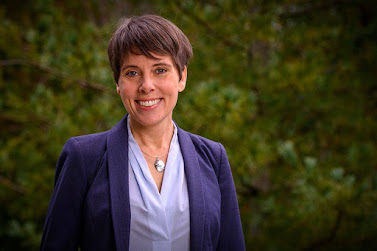
Sonia Furstenau ... is leader of the BC Green Party, and the MLA for Cowichan Valley.

Comments

Popular posts from this blog

BC cannot regulate, redesign, and reinterpret its way to a stable forestry sector. Communities need clear rules, predictable timelines, and accountability for results.

Photo credit:  Atli Resources LP   BC’s Forestry Crisis Continues with Closure of Beaver Cove Chip Facility   As industry leaders, Indigenous partners, and contractors gather this week at the BC Natural Resources Forum in Prince George, the gap between government rhetoric and reality could not be clearer. Just hours after the Eby government once again touted reconciliation, certainty, and economic opportunity under DRIPA, Atli Chip Ltd, a company wholly owned by the ’Na̱mg̱is First Nation, announced it is managing the orderly closure of its Beaver Cove chip facility. The closure comes despite public tax dollars, repeated government announcements, and assurances that new policy frameworks would stabilize forestry employment and create long-term opportunity in rural and coastal British Columbia. “British Columbians are being told one story, while communities are living another,” said Ward Stamer, Critic for Forests. “This closure makes it clear that announcement...

Stamer: Hope for Forestry Completely Shattered After Another Provincial Review Driven by DRIPA

IMAGE CREDIT:  Provincial Forestry Advisory Council Conservative Critic for Forests Ward Stamer says the final report from the Provincial Forestry Advisory Council confirms the worst fears of forestry workers and communities; instead of addressing the real issues driving mill closures and job losses, the NDP has produced a report that ignores industry realities and doubles down on governance restructuring. Despite years of warnings from forestry workers, contractors, and industry organizations about permitting delays, regulatory costs, fibre access, and the failure of BC Timber Sales, the PFAC report offers no urgency, no timelines, and no concrete action to stop the ongoing decline of the sector. “ This report completely shatters any remaining hope that the government is serious about saving forestry ,” said Stamer.  “ We didn’t need another study to tell us what industry has been saying for years. While mills close and workers lose their livelihoods, the NDP is focused on re...

FORSETH – My question is, ‘How do we decide who is blue enough to be called a Conservative?’

How do we decide who’s blue enough to be a Conservative? AS OF TODAY (Friday January 30 th ), there are now eight individuals who have put their names forward to lead the Conservative Party of British Columbia. Having been involved with BC’s Conservatives since 2010, and having seen MANY ups and downs, having 8 people say “I want to lead the party” is to me, an incredible turn-around from the past. Sadly, however, it seems that our party cannot seem to shake what I, and others, call a purity test of ‘what is a Conservative’. And that seems to have already come to the forefront of the campaign by a couple of candidates. Let me just say as a Conservative Party of BC member, and as someone active in the party, that frustrates me to no end. Conservatives, more than any other political philosophy or belief, at least to me, seems to have the widest and broadest spectrum of ideals.   For the most part, they are anchored by these central thoughts --- smaller and less intru...

Labels

Show more